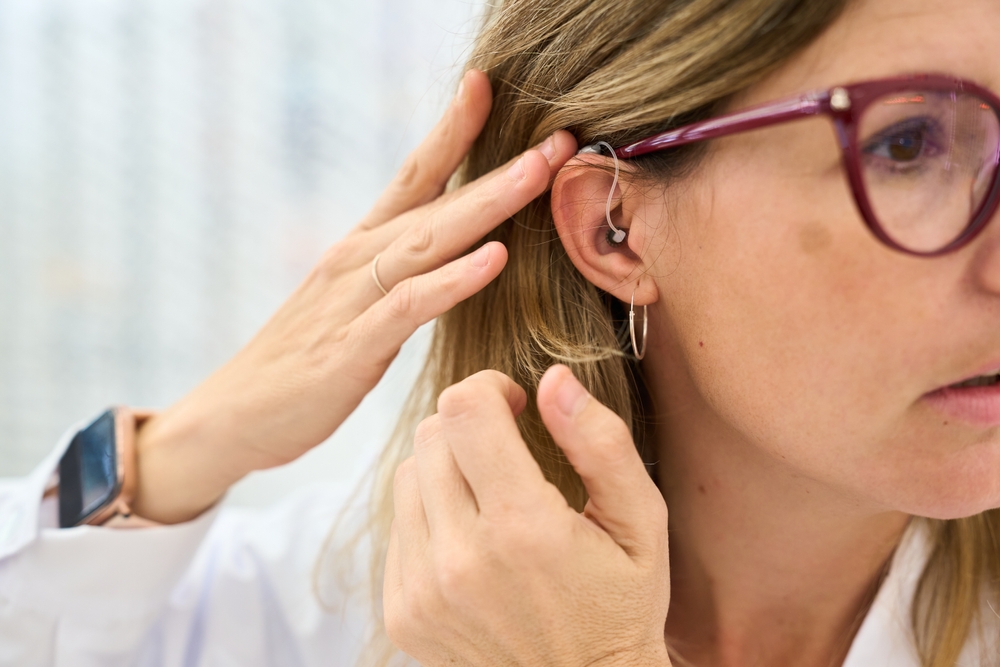
A significant number of patients postpone treating their hearing loss because they harbor concerns regarding device aesthetics and physical comfort. For years, hearing aids were large, noticeable, and often negatively associated with getting old. Regrettably, some people even experienced social alienation because acquaintances falsely assumed that wearing a visible aid signaled a complete inability to comprehend spoken dialogue.
Because this archaic mental image endures, thousands remain deeply reluctant to schedule an initial audiometric evaluation. In reality, the sophisticated hearing instruments of the present era deliver a look and feel that shatters these old assumptions. Advances in design and technology have made them smaller, more comfortable, and far more discreet.
If you have spent years avoiding an audiologist due to the appearance of old devices, now is the perfect moment to explore today’s sleek alternatives!
The Hearing Aid You’re Picturing Doesn’t Really Exist Anymore
If you close your eyes to conceptualize a hearing system, your mind likely crafts a picture of a prominent, cumbersome unit draped behind the ear. If that’s the case, you’re thinking about hearing aids circa the 1980s and ’90s.
Since then, the entire category has evolved. Exponential leaps in digital circuit shrinking, industrial design, and audio computing have totally redefined contemporary hardware. Current product lines are incredibly compact, architecturally clean, and purpose-built to harmonize with your features or sit entirely out of sight.
A multitude of current designs fit entirely inside the physical ear canal, ensuring they remain hidden from view during normal social encounters. Others rest behind the ear but are so compact and lightweight that they’re easy to overlook, especially when matched to your hair or skin tone.
Understanding Your Options: A Guide to Contemporary Device Form Factors
If you are curious about the structural choices available for your rehabilitation, here is an accessible overview of current styles:
Invisible-in-canal (IIC)
For total subtlety, these instruments have no medical equal. The IIC style fits exclusively within the deep internal canal and is built using a custom impression of the patient’s ear passagographic anatomy. Spoken interactions at arm’s length occur without anyone realizing a medical device is present. They represent an ideal intervention path for mild-to-moderate hearing impairments when user stealth is the top priority.
The Versatile Receiver-in-Canal (RIC) / Receiver-in-the-Ear (RITE) Style
This architecture stands as the most frequently prescribed configuration in modern clinical practice. A micro-housing rests behind the upper pinna, transferring processed sound via an ultra-fine, translucent micro-wire to an acoustic driver nestled inside the canal. To a casual observer, their clean lines often mimic high-end commercial wireless earbuds. Unless an individual is specifically searching for the device, it remains completely unnoticed during normal interactions.
Traditional Behind-the-Ear (BTE) Reimagined
This style positions the main component body post-auricularly, offering a slightly larger footprint that remains beautifully sculpted and sleek. Frequently utilized to remediate severe-to-profound auditory loss, they maximize gain and processing capability while maintaining a highly professional, low-profile aesthetic.
The bottom line is simple: modern assistive hearing systems are crafted to serve your life quietly, not to draw attention to your ears.
Modern Hearing Aids: Looking Better and Doing a Lot More
The recent metamorphosis of hearing instruments extends far beyond mere cosmetic downsizing. Present-day models perform like advanced personal audio computers instead of basic medical listening aids. Most current systems boast universal wireless syncing, channeling smartphone calls, high-definition music, and television broadcasts directly to your internal receivers.
Most come with smartphone apps, so you can adjust volume or switch settings without ever touching the device. If you enter a chaotic, crowded room, you can optimize your digital noise reduction settings to isolate speech within seconds. Rechargeable batteries have also replaced the tiny ones people used to struggle with. Just place them on a charger overnight, like your phone.
Overcoming the Psychological Barriers to Better Hearing
Even knowing all of this, it’s easy to hesitate. Initiating an auditory health journey can feel emotionally taxing because it requires acknowledging that our physical baseline has shifted over time. This realization can occasionally induce feelings of helplessness, leaving patients feeling detached from their own physical autonomy.
However, an alternative, empowering framework exists: utilizing hearing technology is never an indicator of structural failure. Rather, they represent a proactive response to natural biological evolution—a transition shared by every human being. Investing in your hearing shows that you are actively deploying advanced resources to support your systemic well-being and social connection.
Visualize the freedom of utilizing a completely covert acoustic system that restores your ability to track jokes, engage in crowded restaurants, and capture every nuance of the activities you love. That is a magnificent example of reclaiming control over your life!
Discover the Reality of Modern Otolaryngological Solutions
To dismantle old assumptions, the best strategy is to witness these design breakthroughs with your own eyes. We encourage you to drop by our office, address your concerns, and hold these miniature devices yourself with zero sales pressure. Treat this as a risk-free exploratory step to comprehend the incredible aesthetic shift that has occurred in our field.
The overwhelming majority of our patients leave their consultation thoroughly amazed by the compact scale, luxurious comfort, and acoustic clarity of current technology! Call our office to schedule your visit online today.